

the fabulous “F” word
People think they need massive amounts of protein for everything—losing weight, gaining muscle, balancing hormones. Protein, protein, PROTEIN!
But here’s the reality: 97% of Americans already get enough protein. In fact, most get TWICE what the body actually requires, yet our national health isn't improving.
On the flip side, we are drastically under-fibered. Only 3% of Americans hit the daily minimum for fiber, even though it’s the real "secret weapon" for health. Fiber strengthens your gut microbiome, boosts your immune system, lowers inflammation, and balances your hormones.
So, where do we start? Let’s track your current intake and build a better foundation from there!
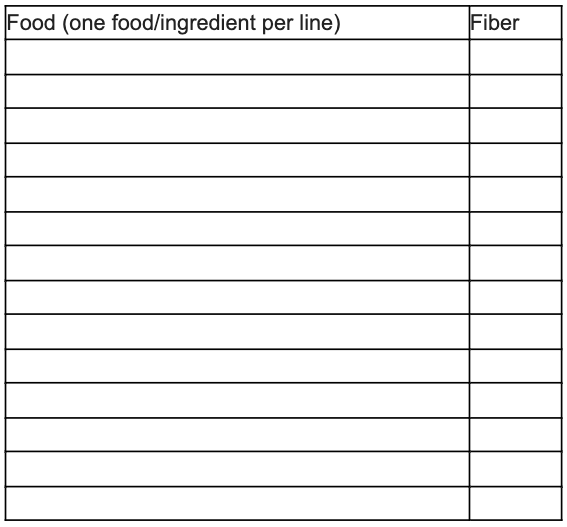
QUICK FIBER CHECK
Record your 24-hour food and drink intake below. List the items in the left column and their fiber scores in the right column. You can find the Fiber Score Guide to the right (Desktop) or below (Mobile) for easy reference.
You can also use apps such as myfitnesspal or cronometer to calculate your daily fiber intake.
Beans:
1/2 cup of cooked beans or lentils: 7 grams of fiber
1 cup of soy milk: 3 grams of fiber
1/2 cup a tofu: 3 grams of fiber
Vegetables:
For each serving of vegetables (1 cup): 4 grams of fiber
(An exception is lettuce, for which 1 cup scores a 2)
Potato with skin: 4 grams of fiber
Potato without the skin: 2 grams of fiber
Fruit:
1 medium piece of fruit (e.g., an apple, orange, or banana; 1 cup applesauce; a banana smoothie): 3 grams of fiber
1 cup of juice: 1 gram of fiber
Grains:
1 slice of white bread, bagel, or equivalent: 1 gram of fiber
1 slice of whole grain bread: 2 grams of fiber
1 cup of cooked pasta: 2 grams of fiber
1 cup of white rice: 1 gram of fiber
1 cup of brown rice: 3 grams of fiber
1 cup of cooked oatmeal: 4 grams of fiber
Typical ready-to-eat cereals: 3 grams of fiber
Highly processed and colored cereals: 1 gram of fiber
Bran cereal: 8 grams of fiber
Interpreting your score
Total your fiber score and let see how you are doing.
Less than 20: You need more fiber in your diet. As it is, your appetite will be hard to control, and you may have occasional constipation. Boosting fiber will help tame your appetite and cut your risk of many health problems.
20-39: You are doing better than most people in Western countries, but as you bring in more fiber into your diet, you will find that it makes foods more satisfying and cuts your calorie intake a bit.
40 or more: Congratulations! You have plenty of fiber in your diet to control your appetite and help keep you healthy. Fiber also reduces your risk of developing cancer, heart disease, diabetes and digestive problems.
If your score is less than 40, I recommend that you gradually increase your fiber intake by 5 grams every week as tolerated, until you reach 40 grams daily. Slow and steady wins the race!
(Adapted from: From Dr. Neal Barnard's Program for Reversing Diabetes)